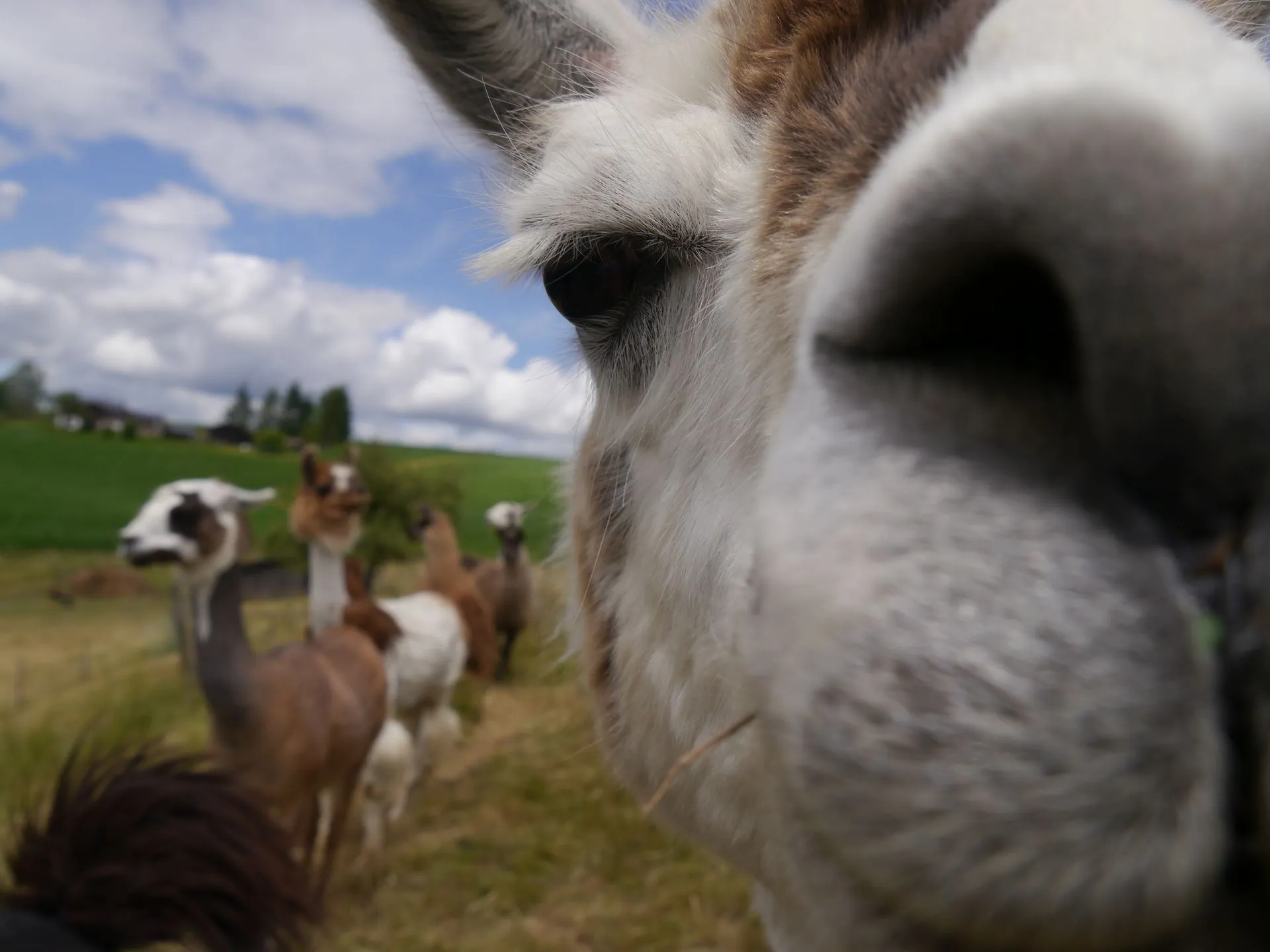
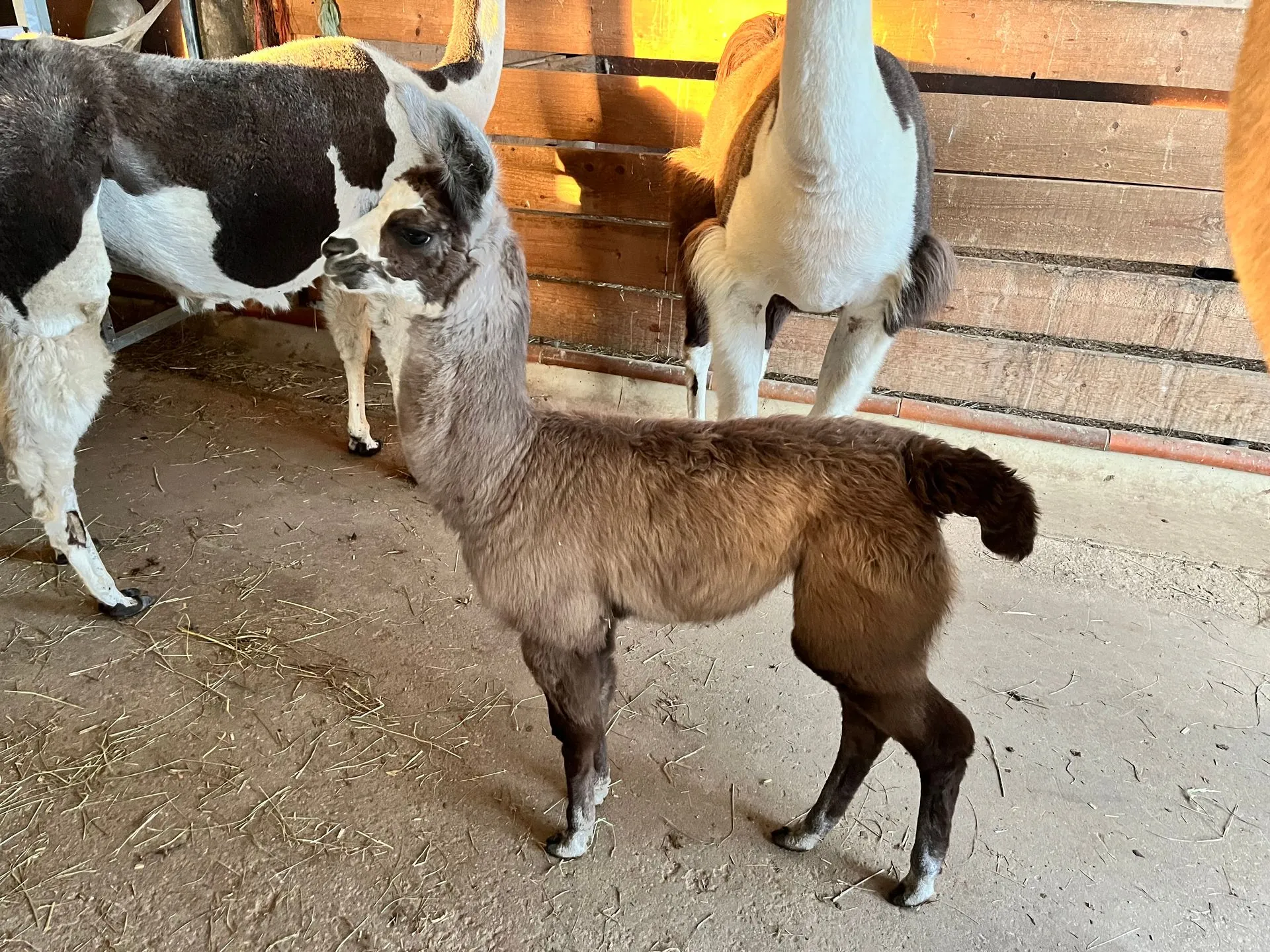
Llamas and alpacas enchant many people - especially their foals with fluffy fur and big eyes look like lively cuddly animals. However, this is exactly where caution is needed: the first few months of life are crucial in determining whether a young animal will later become a balanced companion or a misbehaving problem animal. In this article, you will find out why distance is so important and what responsible handling looks like.
The first 6 months: imprinting in the herd
Llama and alpaca foals, known as crias, are particularly sensitive in the first six months of their lives. During this time, they learn everything they need for healthy social behaviour from their mother and herd: Distance, boundaries, hierarchy and subtle body language.
If humans intervene too much during this phase - for example by frequently stroking, lifting or constantly cuddling - the young animal may perceive humans as conspecifics. In the worst case, the so-called „owner syndrome“ (berserk male syndrome) develops, in which animals later become aggressive, pushy or dangerous towards humans.
Why restraint is responsibility
As tempting as it is to stroke a curious foal, too much closeness disturbs the natural bond with the mother and the herd. This puts us at risk of long-term behavioural problems - often out of well-intentioned affection.
Acting responsibly therefore means observing instead of touching. Young animals should experience people in a positive way, but at a clear distance. This allows them to develop healthy social behaviour and still work with people in a trusting manner later on.
Why llamas and alpacas are not cuddly animals
Even adult llamas and alpacas are not classic cuddly animals like dogs or cats. They enjoy being close to humans in their own, rather reserved way. They do not groom each other and mothers do not lick their young - they simply do not know this kind of physical contact.
If we constantly want to hug or hold them, we overstep their comfort zone. This can lead to stress, defensive behaviour or, in the worst case, dangerous situations.
Correct behaviour when handling llamas and alpacas
Respect individual distance: Every animal has its own comfort zone. On the pasture: look yes, touch no - especially with young animals.
Observe the body language: A relaxed animal signals itself when it is ready to come closer. Pinned ears, raised head or avoidance clearly show that it is just too much.
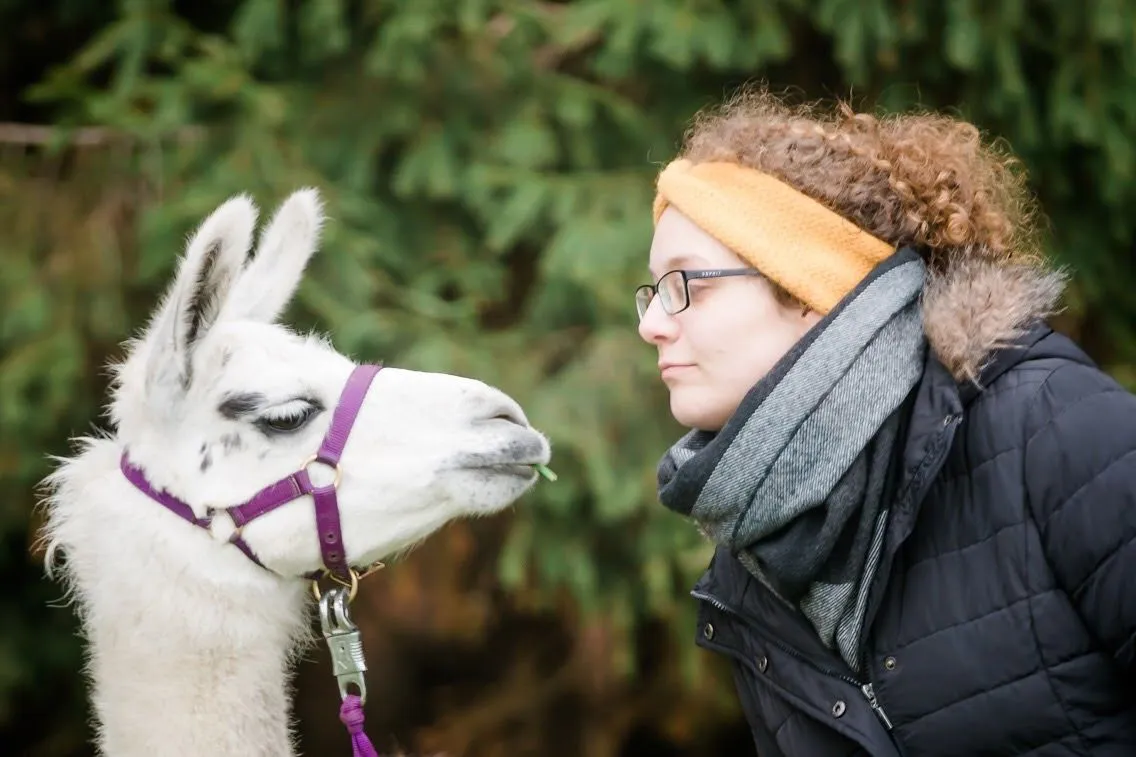
Patience and calmness: Those who behave calmly, predictably and respectfully will be rewarded with trust. Keep your hands on your body - for llamas and alpacas, hands are initially „tools“, not stroking instruments. On the other hand, a cautious kiss on the nose may be acceptable.
Conclusion and message to visitors
Young llamas and alpacas in the pasture are there to be observed, not touched. Even if a curious foal approaches you of its own accord, it is important to keep your distance and not touch it. Each and every one of us has a responsibility to ensure that the animals are raised in good health.
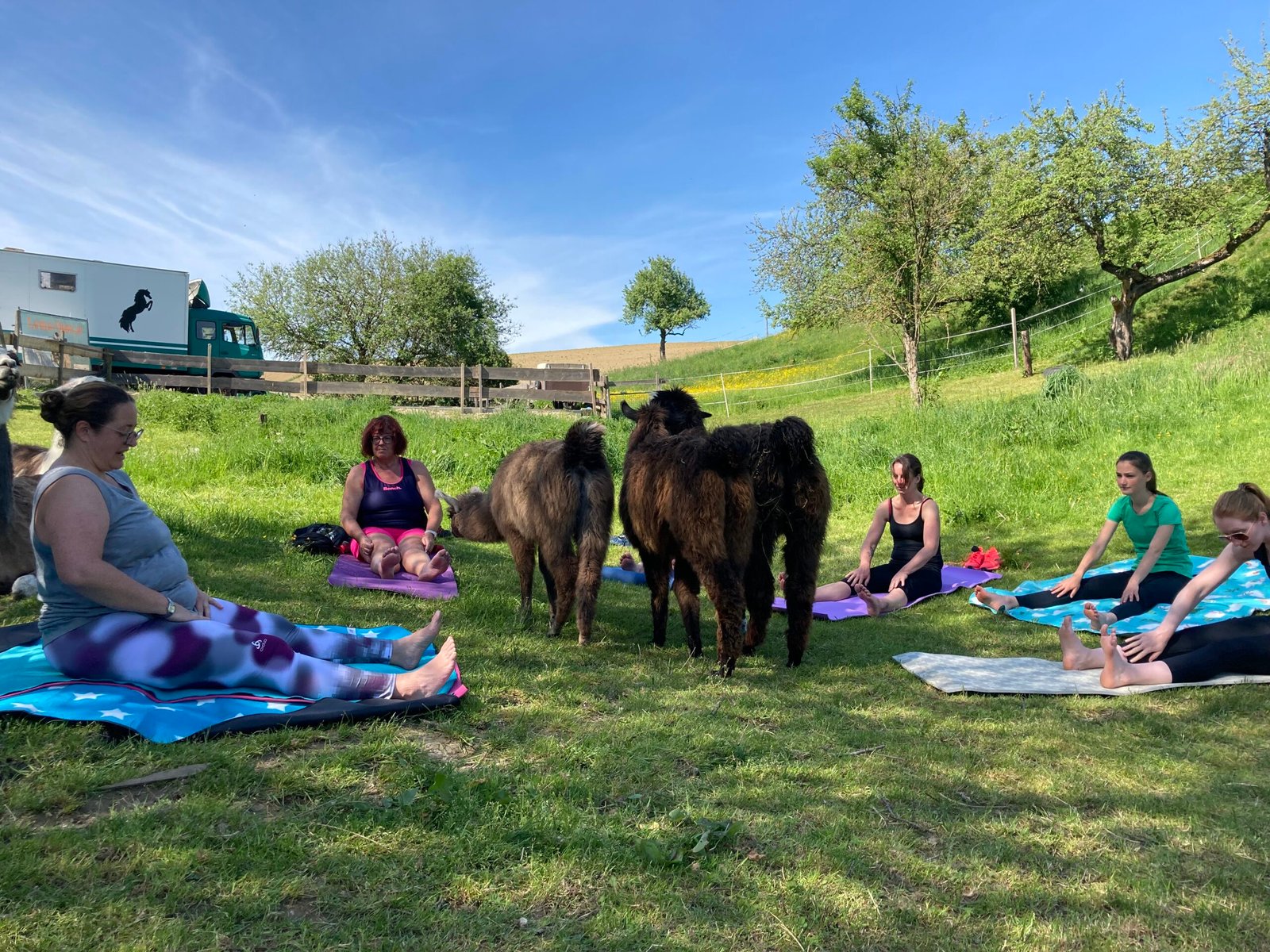
Only if we respect their needs can they later become balanced, friendly companions on llama or alpaca hikes - and we experience them as they really are: as sensitive, fascinating creatures with their very own way of showing closeness.